
Applying a custom logo seems simple, but using the wrong method damages the metal finish. Incorrect branding causes fading logos or localized rust, leading to costly customer complaints. Here is how we match the marking process to the surface treatment to help protect your brand identity.

Polished Chrome & Bare Metal: Laser Etching
The Ink Adhesion Problem
Polished chrome and bare stainless steel have extremely smooth surfaces. Silk screen ink struggles to grip this slick base. Under daily cleaning and friction, the printed ink easily flakes off. This leads to faded branding and unhappy buyers.
The Laser Solution
For these slick finishes, we rely on laser etching. Instead of resting on top of the metal, the laser micro-engraves your logo directly into the hard surface. This works exceptionally well for our solid stainless steel taps without needing chemical ink to stick.
The Commercial Benefit
This process leaves a sharp, clean mark that helps resist heavy scrubbing in busy washrooms. Using laser etching on polished fixtures helps protect your brand image and lowers the risk of fading complaints.
Silk Screen Marking: For E-Coated & PVD Finishes
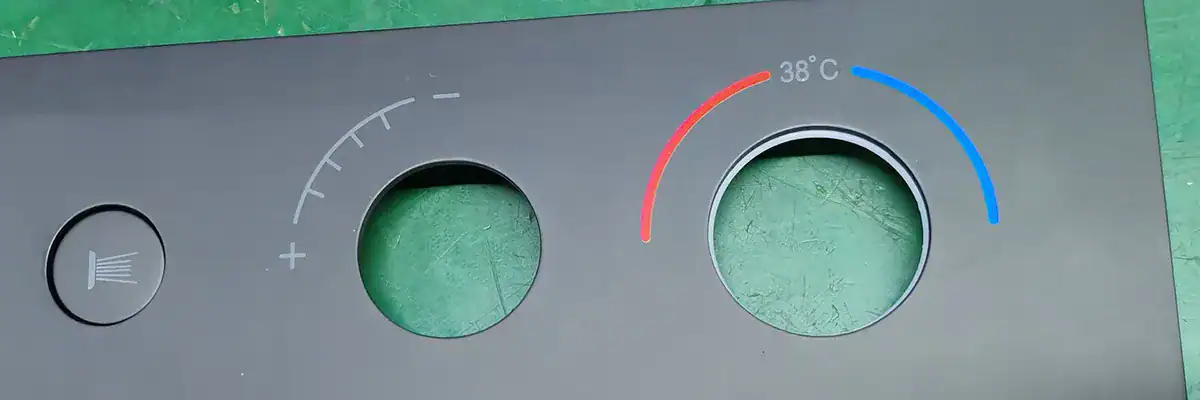
Lasers work well on bare chrome, but they cause major issues on E-coated (Matte Black) and PVD finishes. For these surface treatments, we rely on Silk Screen marking. There are two physical reasons for this rule.
Reason 1: E-Coating is Too Thick (Avoid Blurry Logos)
Matte Black and E-coated finishes build a thick protective layer over the metal. A laser beam struggles to burn through this deep coating cleanly. This often leaves blurry, melted, or burnt text. Silk screening prints the ink firmly on top of the matte base. This helps keep your brand logo sharp and easy to read.
Reason 2: PVD is Too Thin (Lower Rust Risks)
For all custom PVD finishes, we strictly mandate Silk Screen marking to help protect the physical integrity of the ultra-thin coating.
PVD coatings (like Brushed Gold) are ultra-thin. The high heat from a laser burns straight through the PVD shell, exposing the raw metal underneath. This breaks the rust barrier. Months later, corrosion or cracking often appears right around the laser mark. Silk screening sits safely on the surface, helping protect the PVD layer’s physical integrity.
How We Make Silk Screen Last Longer
Many buyers worry that printed ink will easily rub off under commercial cleaning. To help prevent this, we add a crucial extra step. We do not just print the logo and pack the box.
High-Temperature Oven Curing
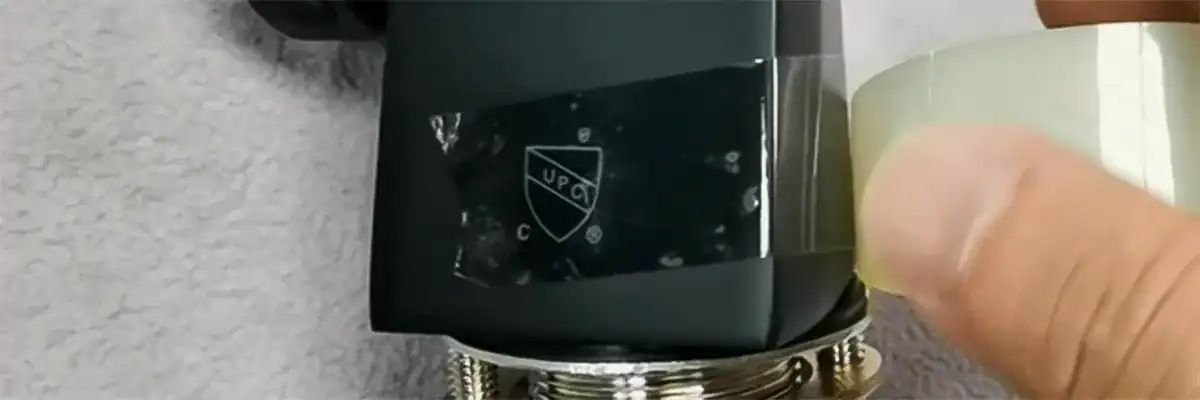
After applying the silk screen logo, we place the fixtures into high-temperature baking ovens. This heat cures the ink, helping it bond tightly to the PVD or E-coated surface.
The Commercial Benefit
This extra baking step helps the logo withstand daily scrubbing and harsh hotel cleaning chemicals. It lowers the risk of faded branding and helps protect your brand image in the field.
The 3M Tape Adhesion Test
How do we know the oven baking actually works? We rely on a simple physical check based on standard tape adhesion tests. After the printed ink cools down, we press strong 3M tape tightly over the logo and pull it off fast.
If the ink lifts off with the tape, the batch fails. This strict adhesion check helps lower the risk of your brand mark peeling off during regular bathroom cleaning.
Logo Placement: Avoiding High-Wear Zones
Where should you put your brand mark? Many buyers ask to place the logo directly on the faucet handle. We suggest avoiding this area.
The handle faces constant friction from hands, rings, and skin oils. Over years of heavy commercial use, this friction wears down both laser and silk screen marks. A safer spot is the lower front or side of the main faucet base. This placement keeps your brand visible while protecting it from direct daily handling.
Frequently Asked Questions: Custom Faucet Branding
Summary: Lowering Your RMA Risks
Partnering with an experienced OEM foundry means matching the right marking technique to the right metal finish. Our logo protocols are set up to help extend product lifespans, reduce scrap rates, and protect your brand identity in the field.
