
The Canadian plumbing market operates under a new reality. Since July 1, 2026, the NRCan (Natural Resources Canada) Energy Efficiency Regulations for faucets are strictly enforced.
For importers, OEM brands, and project contractors, this is no longer a future warning. It is a daily border clearance issue. If your overseas supplier fails to provide specific, SCC-approved lab data, your shipments face immediate CBSA customs holds.
This guide outlines exactly what the active rules demand. Read on to learn how to secure your supply chain against port delays, avoid cheap manufacturing traps, and source compliant plumbing fixtures reliably.
TL;DR (Quick Summary for Importers)
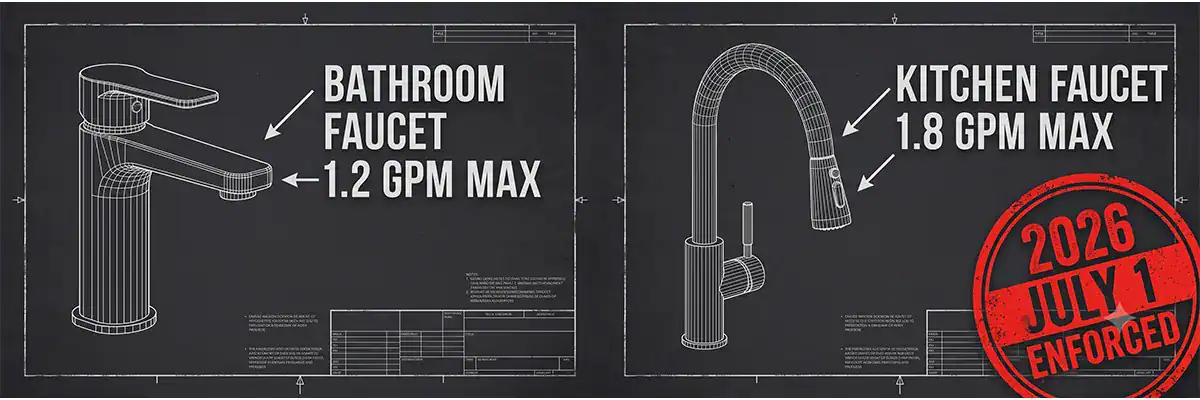
- The Active Rule: Canada now strictly caps faucet water flow (≤ 1.2 GPM for private bathrooms; ≤ 1.8 GPM for kitchens).
- The Border Risk: Without verified test reports from an SCC-approved lab, goods cannot be registered with NRCan and will face CBSA port delays.
- The Supplier Trap: Factories using cheap flow restrictors to pass tests will ruin water pressure, causing high RMA (return) rates from your end-users.
- The Lanerdi Fix: We engineer Solid INOX 304/316 fixtures using CNC machining, premium cartridges, and Neoperl aerators to meet NRCan limits without pressure loss. Pre-certified SCC reports are provided for smooth clearance.
Table of Content
What Actually Changed on July 1, 2026?
The transition period is over. As of July 1, 2026, the NRCan Energy Efficiency Regulations for plumbing fittings are officially active.
For Canadian importers, this changes how goods cross the border. The CBSA (Canada Border Services Agency) now actively enforces maximum water flow limits on specific fixtures. If your imported shipments exceed these thresholds, they face a high risk of being held at customs.
To keep your supply chain moving, any new orders must stay at or below these specific limits:
| Product Category | Maximum Flow Rate (GPM) | Maximum Flow Rate (L/min) |
|---|---|---|
| Private Lavatory (Bathroom) Faucets | ≤ 1.2 GPM | ≤ 4.7 L/min |
| Kitchen Faucets | ≤ 1.8 GPM | ≤ 7.0 L/min |
(Note: Public lavatory faucets and showerheads have separate limits under the same regulation.)
These numbers are now strict regulatory caps. A slight manufacturing deviation—like a kitchen faucet testing at 1.9 GPM—can cause compliance failures. Buyers need to update their purchasing specifications immediately to avoid unexpected port delays and storage fees.
The 3-Step NRCan Compliance Process for Importers
Knowing the new flow limits is just the start. To get your faucets through Canadian customs smoothly, the paperwork must be correct. Here is the standard process for buyers.
Step 1: Get Tests from an SCC-Approved Lab
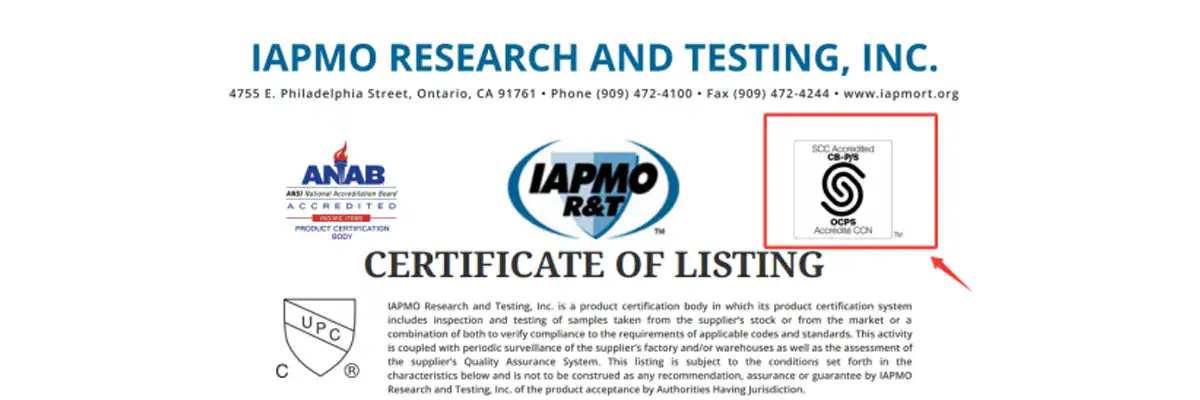
A basic factory test report is usually not enough for CBSA. The water flow tests need to come from a certification body approved by the Standards Council of Canada (SCC). Always ask your supplier for SCC-backed documents before paying a deposit.
Step 2: Submit the Energy Efficiency Report (EER)
Before the goods arrive at the Canadian border, the importer generally needs to send an Energy Efficiency Report (EER) to NRCan. This report lists the product model, brand, and verified flow rate. Submitting this data early helps keep your customs clearance on schedule.
Step 3: Check the Verification Mark
Passing the test means the product earns an energy efficiency verification mark from the SCC-approved lab. This mark usually needs to be visible on the product or its packaging. Customs agents often look for this mark during inspections. Without it, the shipment faces a higher risk of being held.
NRCan vs. cUPC vs. Energy Star: What’s the Difference?
Many buyers mix up these three terms. Misunderstanding them can lead to stalled projects or rejected shipments. Here is the practical difference for your supply chain.
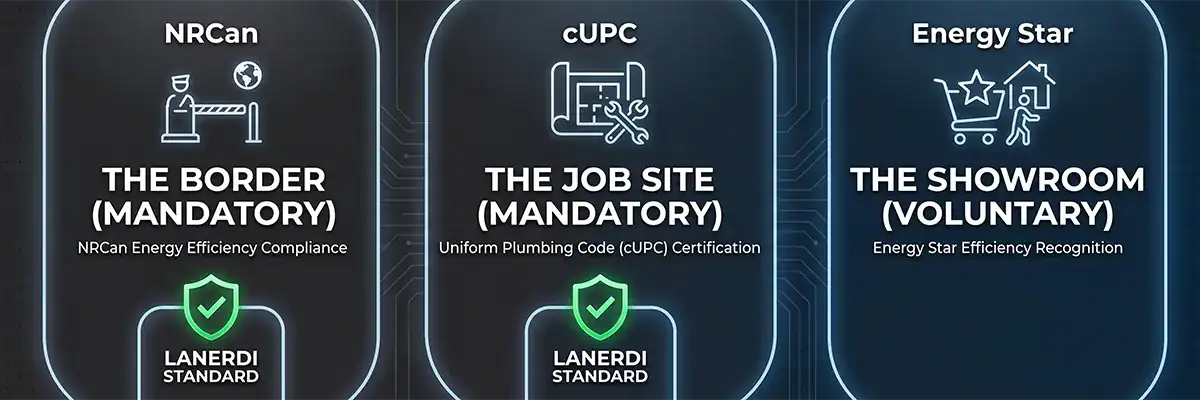
NRCan (The Federal Law for Customs)
This regulates the maximum water flow, like the 1.2 GPM limit. It is a mandatory rule in Canada. Border agents check this. Without proper NRCan registration, your shipment faces direct customs delays.
cUPC (The Local Building Code)
This focuses on mechanical safety and material quality. Local plumbing inspectors usually demand it before installation. A faucet might pass NRCan flow limits but still fail cUPC safety tests. Most Canadian commercial projects require both to avoid compliance issues.
Energy Star (The Marketing Bonus)
This is a voluntary label for extra energy efficiency. While it is a good selling point for consumers, it is not a legal substitute. Having an Energy Star label alone generally will not help you clear Canadian customs if the official NRCan paperwork is missing.
Why Overseas Faucet Suppliers Fail NRCan Standards
With the July 2026 rules now active, many overseas factories are struggling to adapt. Their manufacturing shortcuts often create serious risks for Canadian importers. Here is where supply chains usually break down.
The Cheap Restrictor Trap
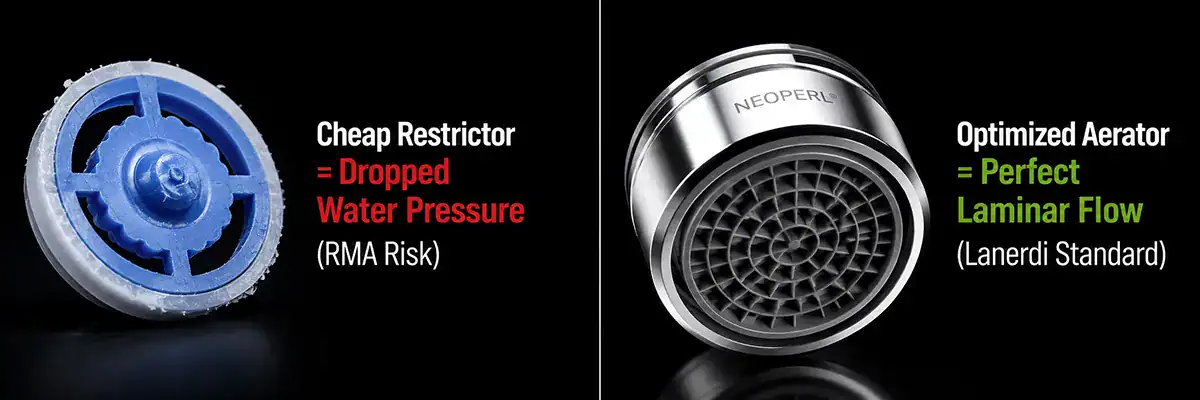
To meet the 1.2 GPM limit, some suppliers simply push a cheap flow restrictor into an old faucet design. This drops the water volume, but often ruins the water pressure. The result is poor user experience and higher RMA (return) rates from your clients.
Invalid Lab Documentation
Canadian customs requires data from SCC-approved labs. Many factories try to provide outdated reports or use unverified local testing centers. If border agents reject the paperwork, the importer is the one paying the daily port storage fees.
Inconsistent Mass Production
A factory sample might pass the NRCan test, but mass production is different. Poor machining tolerances can lead to varying flow rates across a single batch. If a random customs inspection catches one failed unit, the entire container can be held.

The Lanerdi Solution: Pre-Certified Solid INOX Faucets
At Lanerdi, we treat regulatory compliance as a basic manufacturing standard. We build our plumbing fixtures to clear Canadian customs smoothly and perform reliably on-site. Here is how we protect your procurement process.
Ready SCC-Verified Documentation
We provide the actual lab reports from SCC-approved centers for your imported SKUs. This data is ready for your NRCan database registration. Having this paperwork upfront helps keep your shipping schedule on track and avoids border holds.
Engineered Flow, No Pressure Loss
We do not rely on cheap restrictors. Instead, we use calibrated Kerox or Sedal cartridges combined with Neoperl aerators. This keeps the water volume strictly under the NRCan limits while maintaining a strong washing feel. It directly helps lower end-user complaints.
Consistent Solid INOX Production
Variations in mass production can trigger unexpected customs rejections. We use multi-axis CNC machining on our Solid INOX 304 and 316 fixtures. This ensures the internal waterways are nearly identical in every unit, keeping your entire container compliant.
Your Supply Chain, Secured.
Navigating Canadian customs now requires more than just good prices. It demands verified engineering data. A missing SCC report can stall your entire project and increase your costs.
Do not leave your border clearance to chance. Partner with a Jiangmen source factory built for global compliance.
Take practical steps to protect your next shipment:
- Request the Catalog: Review our Solid INOX models engineered for NRCan, cUPC, and AB1953 standards.
- Verify Our Data: Ask for a sample and a copy of our SCC-approved test reports to check the numbers yourself.
- Discuss Your Specs: Connect with our team to align your OEM flow rates and production timelines.
