
Let’s be honest. In this business, a shiny chrome finish can hide a lot of ugly truths.
On a showroom shelf, a $5 Zinc faucet looks exactly like a $50 Brass faucet. But six months later? One is working perfectly, and the other has cracked, flooded a bathroom, and ruined your brand’s reputation.
If you are buying for a hotel project, a brand, or a wholesale channel, you aren’t just buying taps. You are buying peace of mind.
Forget the marketing fluff. As a manufacturer, I’m going to tell you the raw truth about the only three faucet material types that exist in our industry: Zinc, Brass, and Stainless Steel.
Table of Content
The “Junk” Tier: Zinc & Plastic Faucet Material Types
Let’s get the bad stuff out of the way first. You will see these materials with incredibly low prices. Don’t touch them.
Zinc Alloy (The “Zamak” Trap)
- What is it? It’s mostly Zinc (96%) mixed with some Aluminum. We call it “Zamak.”
- The Trap: It feels heavy. In fact, its density (6.6 g/cm^3) is very close to brass. This is how bad suppliers trick you. It feels like quality, but it isn’t.
- Why it Fails: Zinc rots from the inside. It suffers from something called “Intergranular Corrosion.” Basically, dirty water and heat make the metal structure fall apart internally.
- The Result: The body swells up and crumbles like a dry cookie. If you put this in a high-pressure building, it will eventually burst and cause a flood.
- My Verdict: Fine for a temporary rental apartment. Terrible for a serious business.
Plastic & Aluminum
- Aluminum: It creates white rust (oxidation) quickly when it touches city water. It’s too weak for high pressure.
- Plastic (ABS): It’s plastic. The threads strip, the handles snap, and it cracks after a year of hot/cold water cycles.

The Old Standard: Brass Faucets
Brass has been the king for 100 years. It’s a mix of Copper and Zinc. It’s good, but you need to know exactly what you are buying, or you’ll get burned.
Not All Brass is the Same (H59 vs. H62)
- H59 Brass (The Good Stuff): This is what we use for the main body. It has about 59% Copper and a little bit of Lead (~1%). The lead helps our machines cut it cleanly. It’s strong and reliable.
- H62 Brass (The Soft Stuff): This has more Copper (62%). It’s softer. We use it for thin parts like bent tubes or decorative covers.
- Warning: If a factory says the whole faucet is H62, they are lying. H62 is terrible for machining the main body—it gums up the tools.
The “Lead” Headache
Here is the problem with Brass: It contains Lead.
- The Law: The US (NSF/ANSI 61) and Australia (WaterMark) are getting extremely strict. The new limit is basically zero(1.0 μg).
- The Cost: To pass these laws, we have to use acid to “wash” the lead off the surface. It’s expensive and dangerous. If the factory skips this step? You get sued for selling toxic faucets.

The New King: 304 Stainless Steel
In the last 10 years, the smart money has moved to 304 Stainless Steel. Why? Because it solves all the problems Brass has.
Why Steel Wins
- It’s Solid: We don’t melt and pour steel into sand molds (like brass). We carve it from a solid metal bar using CNC machines. That means no hidden air bubbles (sand holes) inside the wall. No leaks.
- No Plating Needed: This is huge. Brass needs plating (Chrome/Nickel) or it turns green. Steel? We just polish it.
- Benefit: No plating means no peeling. Ever.
- Benefit: No plating means no toxic hexavalent chromium waste. It’s cleaner for the planet and safer for our workers.
- 100% Lead-Free: Steel has zero lead. Naturally. You don’t need to worry about California laws or Australian laws. It passes everything automatically.
304 vs. 316 (Know the Difference)
Here is the problem with Brass: It contains Lead.
- 304 Steel: The standard. Perfect for bathrooms, hotels, and kitchens.
- 316 Steel: The “Marine” upgrade. It adds Molybdenum. You only need this if the faucet is outdoors near the ocean. Salt spray eats 304, but 316 can handle it.
Comparison: The Cheat Sheet
Don’t have time to read? Look at this table.
| Feature | Zinc (The Trash) | Brass (The Classic) | 304 Steel (The Hero) |
|---|---|---|---|
| Durability | Low (Rots inside) | Medium (Plating peels) | High (Self-Healing) |
| Lead Risk | High | Medium (Needs washing) | Zero (Lead-Free) |
| Hardness | Soft (Dents easily) | Soft | Hard (Scratch Proof) |
| Manufacturing | Die Casting | Gravity Casting | CNC Machining |
| Best For | Cheap Rentals | Vintage Designs | Modern Projects |
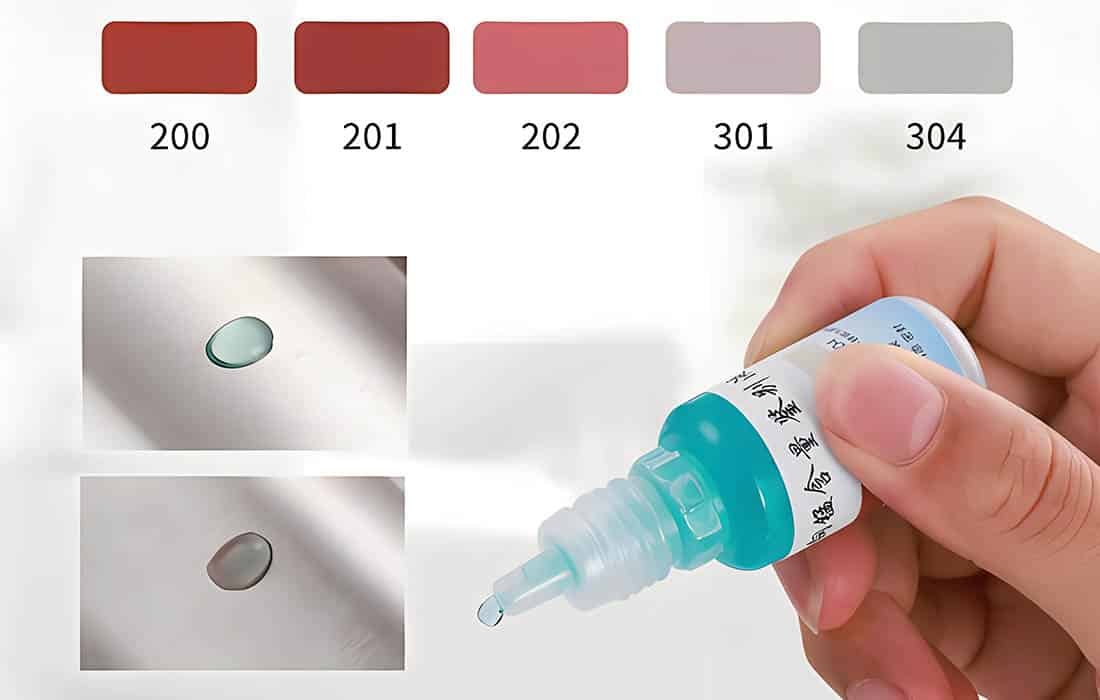
The “Secret” Test: Spotting Fake Steel
Factories try to cheat by using 201 Steel (cheap, rusts fast) instead of 304 Steel. They look the same. A magnet won’t tell you the difference.
Here is how Lanerdi tests it: We use a Reagent Drop Test.
- Drop the acid on the steel.
- Turns Red? It’s Fake (High Manganese).
- Stays Clear? It’s Real 304 (High Nickel).
FAQ: Common Questions
Final Verdict: What Should You Buy?
- Buying for a slumlord or a $10 shop? Buy Zinc. Good luck with the returns.
- Buying for a Victorian-style hotel? Buy Brass. Just make sure the factory does the lead-washing properly.
- Buying for a modern hotel, brand, or commercial project? Buy 304 Stainless Steel. It’s the “install it and forget it” option.
Ready to stop worrying about leaks and lawsuits?
We love Brass. Lanerdi manufactures tons of high-end, vintage-style brass faucets for our luxury clients. But we use Low-Lead H59 Brass, not the cheap junk. However, if your priority is pure durability and zero maintenance for a modern project, Steel is still the winner.
