
Executive Summary (TL;DR)
For wholesale distributors, high RMA (return) rates and customs rejections are rarely caused by the exterior design. They are caused by cheap internal parts failing under pressure. To protect your profit margins in 2026, you must strictly audit all internal and external faucet components before placing a volume order.
Here is the objective procurement baseline:
- Spouts & Handles: Die-cast zinc rusts and strips hex screws, causing wobbly handles. Demand CNC-machined solid stainless steel for a zero-tolerance fit and physical lead-free compliance.
- Cartridges & Diverters: Cheap plastic cracks under water pressure, causing drips and cross-flow. Require European-grade ceramic cartridges and precision-machined metal diverter cores (tested for 500k cycles).
- O-Rings & Washers: Standard rubber cracks from thermal shock. You must demand high-temp, 100% PFAS-free silicone seals to prevent leaks and pass strict EPA/REACH customs audits.
- Aerators & Supply Lines: Low-grade hoses burst, and basic aerators fail regional water-saving laws. Require commercial PEX hoses and premium aerators to lock flow rates legally at 1.2 or 1.8 GPM.
- Nuts & Weight Kits: Plastic mounting nuts break, and screw-on weights slip, causing spray head droop. Demand CNC metal compression nuts and “tool-less” weight kits to drastically cut plumber labor costs.
Introduction: The True Cost of Cheap Parts
For wholesale distributors buying plumbing fixtures by the container, a sleek exterior design only secures the first sale. What actually decides your annual profit margin is your RMA (Return Merchandise Authorization) rate.
A faucet is not just a piece of metal; it is a high-pressure mechanical system. Saving 50 cents on a cheap rubber seal or a plastic nut can easily lead to a leaking fixture six months later. For a distributor, a leaking fixture means angry retail partners, massive property damage claims, and eventually, a destroyed brand reputation.
As customs inspections and plumbing safety codes get stricter in 2026, relying on a factory’s default materials is a massive financial risk. Sourcing directors must stop looking only at the outer shell and perform a strict engineering audit on all internal and external faucet components.
Before you place your next volume order, here is the objective breakdown of the critical parts you must check to protect your cash flow and keep your RMA rates at zero.
Essential Faucet Components
The visible parts of a fixture are often judged only on their design. However, for B2B procurement, these essential faucet components serve as the first line of defense against daily physical abuse and strict customs inspections.
Spout
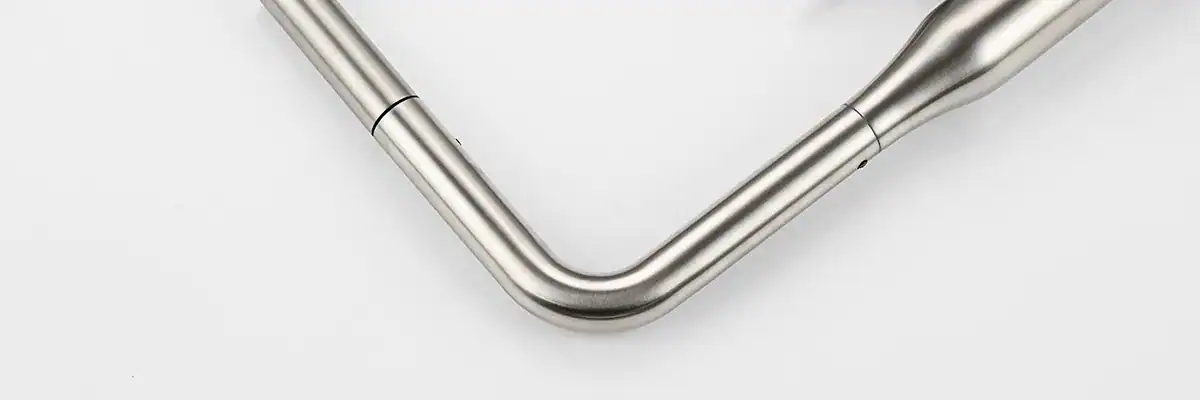
The spout is the largest metal piece of the faucet. To cut costs, many factories pour liquid zinc alloys or cheap brass into a mold (die-casting).
The problem with cheap casting is porosity. It creates microscopic “sand holes” inside the metal that eventually rust and leak water through the spout’s body. Furthermore, standard brass often struggles to pass modern heavy metal audits at the border.
To guarantee zero rust and zero customs delays, top wholesalers now demand spouts made entirely from Solid INOX 304 or 316 stainless steel. Stainless steel naturally meets the strict Lead-Free requirements defined by the US EPA without needing any internal chemical coatings.

Handle
The handle is pushed, pulled, and twisted dozens of times a day. A massive source of retail complaints and subsequent wholesale RMA returns is a handle that becomes loose and wobbly after just six months of use.
Most buyers understand that these external faucet components lock onto the internal valve stem using a small hex screw (set screw) inserted through a threaded side hole. However, the root cause of the failure lies in the manufacturing method of the handle’s main cavity, particularly when relying on cheap zinc die-casting.
When standard zinc handles are cast, the main square cavity is often slightly too large. This microscopic gap means the twisting force is not absorbed by the handle body. Instead, the shear stress is pushed entirely onto the tiny hex screw.
Because zinc is a very soft metal, this daily rocking motion quickly strips the female threads inside the side hole, making it impossible to tighten the screw ever again.
To eradicate this failure rate, modern procurement standards require handles carved from hard metals—such as solid stainless steel—using precision CNC machining. A zero-tolerance CNC cavity fits the valve stem mathematically perfectly, allowing the metal body to absorb 100% of the twisting force rather than the screw.
Furthermore, threads tapped into hard stainless steel do not strip, ensuring the handle remains permanently secure in high-traffic environments.
Internal Faucet Parts
While external shells drive consumer appeal, the internal faucet components govern the actual lifespan of the product. When internal mechanics fail, wholesalers face disastrous RMA (return) rates. Analyzing the hidden parts is the most critical step in supply chain due diligence.

The Valve vs. The Cartridge
Many basic guides confuse the terms “valve” and “cartridge.” However, for wholesale procurement, distinguishing between these two mechanical engines is strictly required to manage quality control across different product lines.
- The Mixing Cartridge (For Single-Handle Mixers):
Inside modern single-handle faucets lies the ceramic cartridge. It blends hot and cold water. Cheap plastic cartridges crack under heat. The global procurement standard mandates European-grade internals, such as Sedal or Vernet.
These utilize high-density alumina ceramic discs designed to survive testing standards outlined by ASME A112.18.1 / CSA B125.1, guaranteeing over 500,000 frictionless actuations without a single drop of leakage. - The Valve Stem (For Two-Handle Faucets):
Traditional widespread faucets control water using separate hot and cold valves (spindles). Instead of weak plastic or cheap brass, commercial-grade valves must feature solid stainless steel bodies with quarter-turn ceramic discs.
This heavy-duty construction resists sudden spikes in pipe pressure (water hammer effect) that instantly destroy inferior zinc or plastic parts.
Aerator
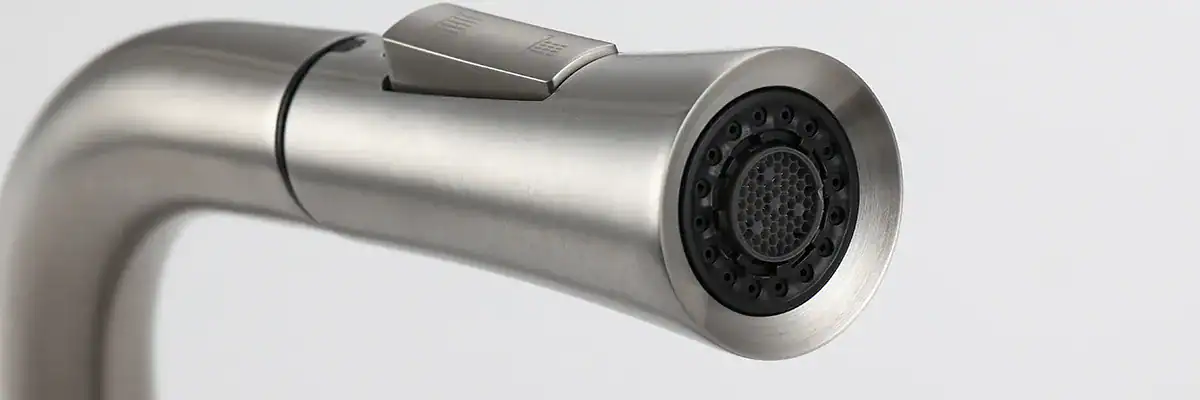
The aerator sits at the very tip of the spout. Its physical job is to introduce air into the water stream, preventing splashing. However, its legal job is far more important.
If an aerator pushes too much water, the entire shipping container can be blocked by customs for violating local conservation laws. To pass strict audits, top-tier faucets integrate precision aerators (like Swiss Neoperl).
These mathematically lock the laminar flow at 1.2 GPM (for bathrooms) or 1.8 GPM (for kitchens), ensuring immediate compliance with aggressive regional mandates like the California Energy Commission (CEC).

Diverter
In fixtures with side sprayers or integrated shower systems, the diverter redirects the water path from one outlet to another. This small component handles immense pressure shifts.
Low-grade plastic diverters frequently jam or cause cross-flow (water leaking from both the spout and the showerhead at the same time). Heavy-duty commercial systems demand diverters built with precision-machined metal cores to guarantee reliable switching under high hydrostatic pressure.
Check Valves (Backflow Preventers)
Hidden inside pull-down kitchen hoses and pull-out spouts, check valves are tiny mechanisms that allow water to flow in only one direction. Cheap manufacturers often skip this faucet component to save pennies, or use inferior springs that jam.
If a faucet lacks a proper check valve, contaminated water from a plugged sink can be siphoned back into the clean municipal water supply. This violates strict international plumbing codes. Wholesale buyers must ensure all pull-out fixtures integrate certified backflow preventers to pass commercial building inspections.
Sealing Elements
Rubber rings and gaskets might be the cheapest faucet components to manufacture, but they cause the most expensive legal and maintenance failures. For wholesale distributors, overlooking these tiny seals during a factory audit is a massive financial risk.

O-Rings
Historically, factories used PFAS (per- and polyfluoroalkyl substances) to make rubber O-rings smooth, waterproof, and durable. However, global regulatory enforcement has changed drastically. Governing bodies, including the European Chemicals Agency (ECHA) and the US EPA, are aggressively banning these toxic “forever chemicals” from drinking water systems.
Importing faucets with PFAS-laced O-rings or synthetic lubricants will now result in immediate customs rejection and severe legal liabilities. The modern procurement baseline strictly requires 100% PFAS-free, food-grade silicone for all internal seals. Buyers must demand physical lab documentation proving the absence of these chemicals before accepting any shipment.

Washer
Washers create watertight seals at connecting joints, such as where the supply line meets the valve. Because they constantly sit between freezing cold and scalding hot water, they experience severe “thermal shock.”
Cheap standard rubber cannot survive this. It quickly dries out, hardens, and cracks under rapid temperature changes, causing slow leaks under the sink that destroy expensive cabinetry.
To prevent these property damage claims, commercial sourcing requires washers made from industrial EPDM (Ethylene Propylene Diene Monomer) rubber or high-temperature silicone.
These premium materials remain highly flexible and hold a tight seal for years, completely ignoring extreme temperature swings.
Hydrodynamic Routing & Installation Hardware
Many amateur B2C guides misclassify waterlines and fixing nuts as “specialized” or optional faucet parts. In commercial B2B procurement, these are not optional accessories—they are the critical infrastructure that connects the fixture to the building’s plumbing. Failing to audit these connection systems guarantees catastrophic leaks and skyrocketing installation labor costs.
Supply Line
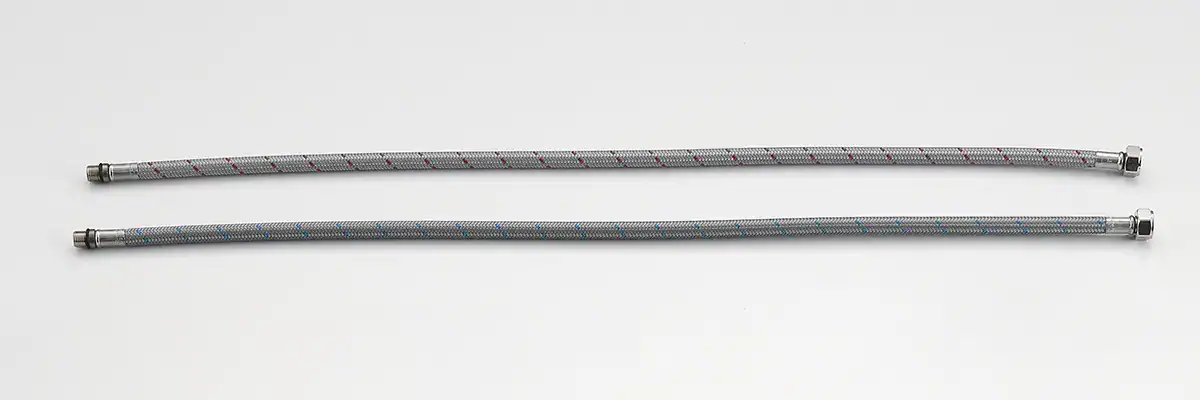
Many amateur guides incorrectly isolate the connection nuts from the hoses. In professional plumbing procurement, the Supply Line Assembly must be audited as a complete, three-part hydrodynamic system. When a faucet fails under the sink, the property damage liabilities are catastrophic. Top-tier wholesale standards dictate the following composition:
- The Inner Core (Commercial PEX): Cheap EPDM rubber hoses degrade and rupture under sustained hot water flow. 2026 mandates dictate commercial-grade PEX (cross-linked polyethylene) inner cores, guaranteeing high thermal stability and 100% PFAS-free drinking water safety.
- The Outer Armor (304 SS Braided Mesh): To prevent bulging and protect against physical abrasion under cramped sinks, the PEX core must be tightly encased in a Solid INOX 304 stainless steel braided mesh.
- The Connection Hardware (Supply Line & Compression Nuts): The assembly is only as strong as its weakest link. The Supply Line Nuts (including true compression nuts used at the angle stops) absorb the violent hydraulic shockwaves known as water hammer. Low-density zinc or plastic nuts will quickly strip or crack under this vibration.
Securing the system requires heavy-duty, CNC-machined stainless steel or solid brass nuts. This ensures the threads lock perfectly, taking years of hydraulic vibration without ever backing out or blowing off.
Mounting Nut
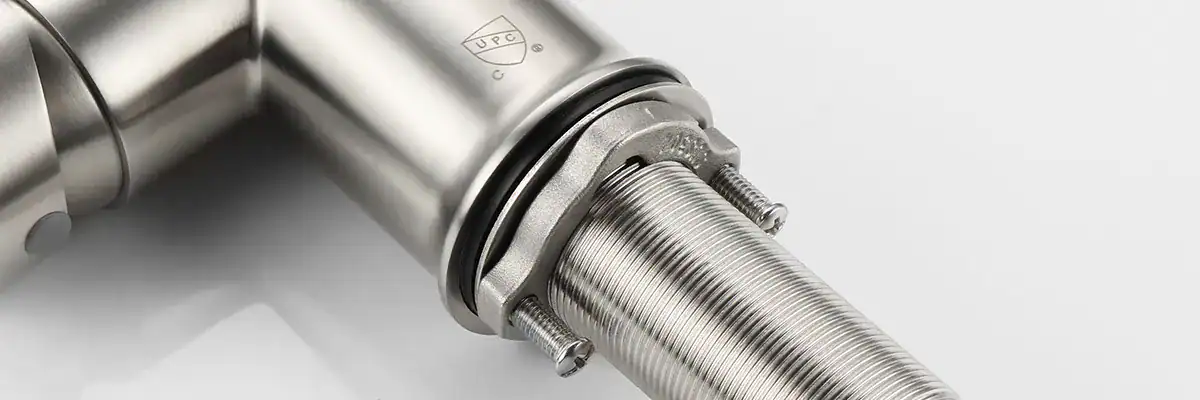
Plumbers charge by the hour. Installing a faucet in the cramped, dark space under a kitchen sink is already difficult. When factories supply cheap plastic mounting nuts, the threads easily strip when tightened. If a nut strips or breaks, the plumber has to stop, remove the fixture, and start over, which destroys the contractor’s labor budget.
To optimize Total Cost of Ownership (TCO), modern procurement standards require heavy-duty stainless steel or solid brass mounting nuts. Furthermore, utilizing a “quick-spin” design—where the nut slides freely up the threaded shank and only requires a few final turns to lock—can cut actual installation time by 50%. For a 500-unit apartment project, this time saving translates into massive financial value for the distributor’s clients.

Weight Kit
For commercial and residential kitchen faucets, the retraction weight kit is the engine behind the pull-down sprayer. Many standard guides completely ignore this faucet component, yet it is responsible for one of the highest volume of user complaints: spray head droop.
Cheap, screw-on weights are notorious for slipping down the hose over time, killing the retraction force. Furthermore, installing them requires plumbers to use tools in cramped, dark spaces under the sink, driving up installation labor costs.
To optimize the Total Cost of Ownership (TCO), top-tier procurement specifies “Tool-less / Quick-Snap” weight kits. These advanced weights clasp securely onto the PEX hose in one second without any screws, guaranteeing they never slip.
When mathematically calibrated with the hose length and combined with a magnetic docking spout, a precision weight kit guarantees hundreds of thousands of smooth, frictionless retractions without snagging on under-sink pipes.
Auditing Faucet Components FAQ
Conclusion
Securing a profitable plumbing supply chain requires looking far beyond a polished exterior. As global water regulations tighten and plumbing labor costs reach all-time highs, wholesale distributors can no longer afford to ignore internal faucet components.
A commercial fixture is only as reliable as its weakest part. Saving a few cents on an unverified rubber O-ring or a cheap zinc mounting nut will completely destroy the value of a high-end stainless steel body. The result is always the same: catastrophic leaks, rejected customs shipments, and skyrocketing RMA rates.
Before placing your next bulk container order, you must demand a detailed Bill of Materials (BOM) (External Link to Investopedia’s business definition of BOM) from your factory.
Do not accept generic descriptions. Audit the origin of the ceramic cartridges, verify the integration of commercial PEX supply lines, and require physical lab reports proving that all internal seals are 100% PFAS-free. In wholesale procurement, true risk management always starts from the inside out.
About the Insights Provider: Lanerdi Solid INOX Faucet Manufacturer
This supply chain analysis is provided by Lanerdi, a 100% pure B2B source manufacturer located in Jiangmen, China. Operating a 35,000m² facility with a 60,000-set monthly capacity, we specialize exclusively in heavy-duty Solid INOX 304/316 plumbing fixtures. We engineer predictability for global wholesalers through Tier-1 component integration and guaranteed factory-gate pricing.
