
TL;DR (Too Long; Didn’t Read)
- Microscopic Precision: Luxury stainless steel faucets are machined to an incredibly tight tolerance of ±0.01mm (10 microns)—a tiny fraction of a human hair.
- Stops Leaks Dead: This exact sizing ensures rubber O-rings are squeezed perfectly inside their grooves, holding back high water pressure without crushing or tearing the rubber.
- Protects the Core: It guarantees the metal housing is perfectly flat and aligned, which protects the delicate ceramic discs inside the faucet from bending or dripping.
- The Perfect Feel: It eliminates the tiny, overlapping gaps between connecting parts (known as tolerance stack-up), ensuring the handle feels completely solid and smooth, never loose or wobbly.
- A Lifelong Investment: While cutting tough stainless steel this accurately takes much longer and costs more upfront, it creates a premium fixture guaranteed to last for decades without issues.
Table of Contents
How Tiny Details Make a Huge Difference in Plumbing
Making plumbing fixtures has changed. We used to cast metal and shape it by hand, but today, we rely on advanced computer-controlled (CNC) machines. This shift means better quality and longer-lasting faucets. For high-end stainless steel faucets, the exact size and shape of the internal parts matter a lot. These tiny details control how well the faucet seals, how the water flows, and how the handle feels in your hand.
Most standard parts are made with an acceptable size difference—known as a “tolerance”—of ±0.1mm to ±0.25mm. But premium faucets require a much tighter tolerance of ±0.01mm. To put that in perspective, a human hair is about 70 microns thick. This ±0.01mm tolerance is just 10 microns, which is a tiny fraction of the width of a single hair!
This is not just about chasing perfection. It is a necessary choice based on how rubber seals work, how ceramic parts slide against each other, and how tough stainless steel is. Being off by just a hair can cause big leaks, wear out parts faster, or make the handle feel loose and wobbly. Precision machining makes sure every part fits perfectly.
Achieving this tiny ±0.01mm tolerance is especially hard with architectural stainless steels (like 304 and 316 grades). These metals are tough, heat up quickly, and are hard to cut. Making these parts requires the best CNC machines, special cutting tools, and very careful measuring. We will explain exactly why this strict standard is so important for making high-end faucets

The Challenge of Cutting Tough Stainless Steel
The metal you choose for a faucet decides how long it will last and how safe it is. In the past, manufacturers used brass because it is cheap and easy to cut. Standard brass is so easy to work with that making highly accurate parts is simple. But today, people want lead-free, rust-proof, and highly durable fixtures. This demand has made strong stainless steels, like Type 304 and Type 316, the top choices.
Type 304 is great for everyday water use. Type 316 is even better because it contains a bit of molybdenum, making it extra resistant to rust from salt and harsh chemicals. These metals make the final faucet nearly indestructible. However, the exact things that make stainless steel strong also make it incredibly hard to cut.
| Material Grade | Chromium (Cr) | Nickel (Ni) | Molybdenum (Mo) | Carbon (C) | Machinability Rating |
|---|---|---|---|---|---|
| AISI 303 | 17.0 – 19.0% | 8.0 – 10.0% | None | Under 0.15% | 150 |
| AISI 304 | 18.0 – 20.0% | 8.0 – 10.5% | None | Under 0.08% | 70 |
| AISI 316 | 16.0 – 18.0% | 10.0 – 14.0% | 2.0 – 3.0% | Under 0.08% | 60 |
As the table shows, a lower machinability rating means the metal is harder to cut. Keeping a perfect ±0.01mm size while cutting these tough metals means fighting three big problems: the metal getting harder as you cut it, heat building up, and long metal shavings getting stuck.
When a tool cuts stainless steel, the metal physically hardens. If the machine isn’t perfectly set, the tool can break or push the part out of shape. Also, stainless steel doesn’t spread heat well. The heat stays right where the tool is cutting, which makes the metal expand. If the manufacturer doesn’t plan for this, the part might measure perfectly while it’s hot but shrink to the wrong size when it cools down.
To fight these issues and keep that ±0.01mm accuracy, engineers must use heavy-duty machines that don’t vibrate, special coated cutting tools, and lots of cooling fluid. They also use machines that check the part’s size while it is being made to fix any tiny mistakes right away.
Measuring Perfection: Understanding Microscopic Tolerances
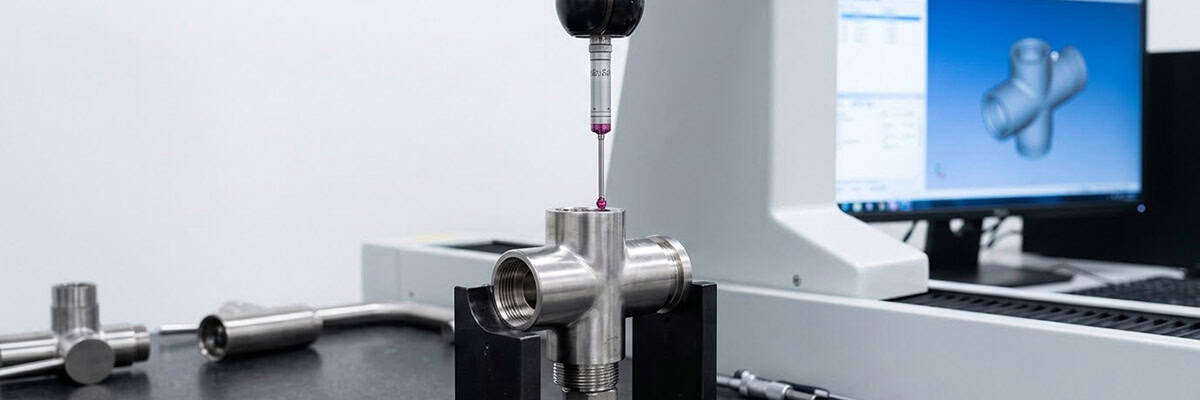
To understand what ±0.01mm really means, we have to look at how engineers measure things. In manufacturing, there are rules for how much a part’s size and shape can vary. Standard CNC machining usually allows parts to vary by ±0.1mm to ±0.05mm. That is fine for the outside casing of a faucet. But pushing that limit down to ±0.01mm puts the work in the same league as making parts for airplanes or medical tools.
This strict rule means a hole meant to be 10.00mm wide can only be between 9.99mm and 10.01mm. This guarantees that parts made in different factories will fit together perfectly without anyone having to force or adjust them.
Working this precisely changes everything about quality control. You can’t just use standard hand tools to check the sizes anymore. Factories have to use advanced 3D lasers and measuring machines. Because the rules are so strict, more parts fail the inspection and get thrown away—sometimes up to 15% of them.
Making parts this perfectly also takes two to four times longer, which shows just how much effort and money goes into creating a high-end faucet.

Stopping Leaks: The Science of Rubber O-Rings
The most important job of any faucet is to not leak. Faucets stop water using rubber loops called O-rings, which sit inside carefully cut metal grooves. An O-ring only stops water if it is squeezed exactly the right amount. It’s the rubber trying to bounce back to its normal shape that blocks the water.
There are strict international rules for exactly how deep and wide these metal grooves need to be. The amount the rubber gets squeezed is mathematically calculated based on whether the part moves or stays still.
For parts that don’t move, the rubber needs to be squeezed tightly (about 18% to 25%) to fight high water pressure. For moving parts, like a pull-out sprayer, the squeeze is lighter (10% to 18%) so the handle doesn’t feel stiff and the rubber doesn’t wear out.
This is where the ±0.01mm rule is a lifesaver. If the metal groove is cut just a tiny bit too deep, the rubber isn’t squeezed enough, and water will sneak past it. If the groove is too shallow, the rubber gets crushed. A crushed O-ring will wear out very fast and lose its stretchiness permanently. Under high pressure, water can even push the rubber into tiny gaps between metal parts.
| System Pressure | Maximum Allowable Gap |
|---|---|
| Low (Under 100 bar) | 0.30 mm |
| Medium (150 – 250 bar) | 0.10 – 0.15 mm |
| High (Over 300 bar) | 0.08 mm or less |
Keeping a tolerance of ±0.01mm guarantees those gaps stay microscopic so the rubber doesn’t tear or blow out. Even the smoothness of the metal groove matters. If the metal is rough, it acts like sandpaper against the moving rubber. High-precision machines polish these grooves to be almost mirror-smooth, extending the life of the seal.

The Heart of the Faucet: Ceramic Discs
The engine of a modern faucet is the ceramic disc cartridge. Old faucets used rubber washers that wore out quickly and caused drips. Modern faucets use two extremely smooth ceramic discs.
As you move the handle, these discs slide over each other to line up holes and let water through. Because ceramic is incredibly hard and doesn’t care about temperature changes, this system can easily last for over 500,000 uses.
However, these ceramic discs rely on the stainless steel faucet body around them being perfect. If the metal seat holding the cartridge isn’t perfectly flat and straight, the plastic housing of the cartridge gets bent out of shape when it’s tightened down. Over time, this bending breaks the watertight seal between the ceramic discs, causing a drip that you can’t fix.
The ceramic discs themselves are so flat that they are measured using light waves. They are flattened to within less than a single micron.
| Number of Light Bands | Flatness (Microinches) | Flatness (Millimeters) |
|---|---|---|
| 1.0 | 11.6 | 0.000294 |
| 2.0 | 23.1 | 0.000588 |
| 3.0 | 34.7 | 0.000881 |
| 5.0 | 57.8 | 0.001469 |
| 10.0 | 115.7 | 0.002938 |
They are so perfectly flat that they actually stick together like magnets. But that microscopic perfection is useless if the metal holding them is crooked. The ±0.01mm metal machining ensures no uneven pressure crushes the delicate ceramic parts.

The Perfect Feel: Preventing Wobbly Handles
A faucet is made of many small parts joined together. When you join parts, tiny size errors add up. This is called “tolerance stack-up”. If every part of a handle is allowed to be off by a standard ±0.1mm, those tiny errors combine. By the time the handle is fully put together, it might have nearly half a millimeter of empty space.
For you, the user, that extra space feels like a loose, rattling, wobbly handle. When you buy a luxury faucet, you expect it to feel solid and smooth right away. A wobbly handle feels cheap. Even worse, a loose handle bangs against the delicate plastic gears inside the faucet every time you use it, breaking the faucet long before it should normally wear out.
The best way to prevent this wobbly feeling is to use the strict ±0.01mm rule on every connecting part. This leaves no room for error. The handle moves effortlessly but feels completely solid. This rule is also necessary if the faucet gets a special colored coating (like matte black or gold). These coatings add a tiny bit of thickness. The metal underneath must be cut with extreme precision so the parts still fit together perfectly after they are painted.
Proving It Works: Extreme Pressure Testing
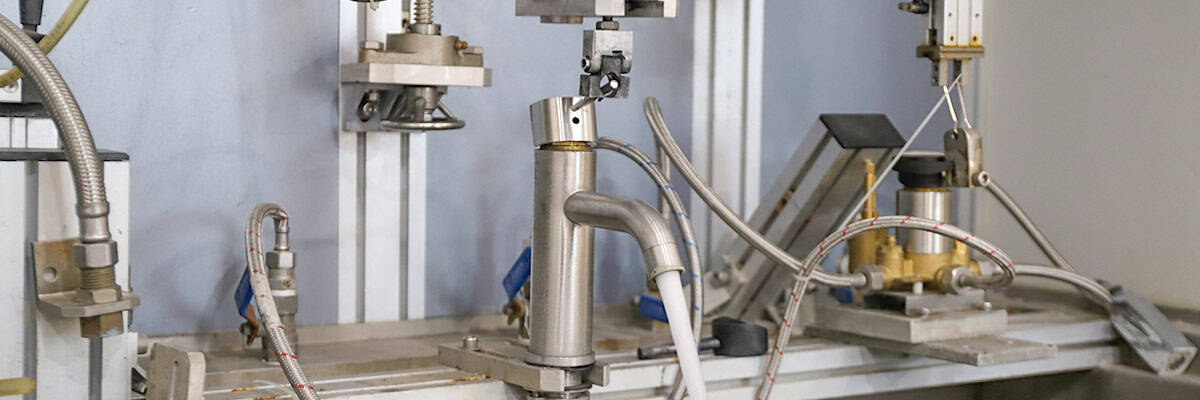
This extreme precision isn’t just a theory; it is proven in strict testing labs. Plumbing rules in North America and Europe require faucets to survive brutal tests to make sure they won’t flood a home. Faucets are hooked up to high-pressure water and machines repeatedly open and close the handle hundreds of thousands of times.
During these tests, the faucet can’t leak, bend, or get hard to turn. Faucets made with standard, looser measurements almost always fail these tests early. Their loose handles damage the inside plastic, and their poorly sized rubber seals get shredded by the water pressure.
On the other hand, faucets made with the ±0.01mm rule breeze through these tests. The tight fit protects the inner parts, and the perfect grooves keep the rubber seals safe. Top-tier factories even test their parts with helium gas before shipping them. Helium gas is so tiny it can slip through cracks that water can’t. If a part passes a helium test, you know it is absolutely perfect.

The Cost of Quality: Why Precision is an Investment
Choosing to make parts this accurate is a massive financial commitment. Making the acceptable error window ten times smaller makes the manufacturing process much slower and more expensive.
| Manufacturing Step | Standard Tolerance (±0.1mm) | High-Precision (±0.01mm) |
|---|---|---|
| Machining Speed | Normal | 2 to 4 times slower |
| Tools Needed | Standard | Expensive coated tools |
| Quality Check | Hand tools (Calipers) | 3D Lasers and Scanners |
| Wasted Parts | Under 2% | 5% to 15% or more |
The machines have to run slower so the metal doesn’t get too hot, which can double or quadruple the time it takes to make one part. The cutting tools wear out faster, and the testing process takes longer. Because of these high costs, cheap hardware store faucets use weak plastic or cheap metals with loose, sloppy measurements. They cover up the bad fit with thick rubber washers or glue. These cheap faucets usually start leaking in just a few years.
Premium brands know that doing it right the first time is cheaper in the long run. While a high-precision stainless steel faucet costs more to buy, it saves you money by never causing water damage and never needing to be replaced. A faucet made this perfectly will easily last 15 to 20 years without a single drip.
Premium companies ditch toxic brass completely and carve their faucets out of solid blocks of stainless steel. To them, the high cost of ±0.01mm accuracy is worth it because it creates a luxury product that will last a lifetime.
Conclusion: The Boundary Between Basic and Luxury
Making a high-end stainless steel faucet requires blending tough materials, water physics, and microscopic measurements. Holding a ±0.01mm rule isn’t just for showing off. It is the core reason the faucet will work flawlessly for decades.
Stainless steel is safe, rust-proof, and beautiful, but it fights the machines trying to cut it. By taking the extra time and money to cut it perfectly, manufacturers eliminate wobbly handles and protect the delicate ceramic discs inside.
This precision ensures that the rubber O-rings are squeezed just right, stopping leaks dead in their tracks. Yes, it costs more to build things this way. But ultimately, this tiny ten-micron measurement is the clear line between a cheap throwaway faucet and a permanent, luxury fixture for your home.
