
So, you’re looking at the Thai market. Smart move. With a booming tourism industry and constant hotel/condo construction, the demand for sanitary ware in Thailand is huge. Whether you are a foreign manufacturer wanting to export to Bangkok or a local distributor looking to source the next best-seller, the opportunity is right there.
But here is the catch: You can’t just ship faucets to Thailand.
Unlike some markets where you might get away with a simple safety declaration, Thailand has a “gatekeeper” that is strict, mandatory, and legally enforced. It’s called TISI (Thai Industrial Standards Institute).
If you try to import sanitary faucets without playing by TISI’s rules, your goods will get stuck at the port, and you could face fines. Sound scary? It doesn’t have to be.
We’ve broken down everything you need to know to navigate the red tape and get your products on the shelves.
Table of Content
- The Golden Rule: It’s Not Optional
- The “0.1 MPa” Trap: Why Western Faucets Often Fail
- Pressure Resistance and Durability
- Chemical Safety: Heavy Metal Migration
- The “Importer-Licensee” Rule
- The Conformity Assessment Process: Obtaining the License
- Marking, Labeling, and Digital Compliance (QR Codes)
- Import Procedures and Customs Clearance
- Strategic Recommendations for Market Entry
- Conclusion
- FAQs
The Golden Rule: It’s Not Optional
First things first. In Thailand, standards for faucets aren’t just “nice to have”—they are Compulsory.
Under the Industrial Product Standards Act, sanitary faucets are “Controlled Goods.” This means it is illegal to manufacture or import them without a license.
- The Standard: You need to memorize this number: TIS 2067-2552 (2009).
- The Scope: This covers basin faucets, kitchen sink taps, and bath/shower mixers.
- The Mark: You need the Red TISI Mark (mandatory) on your product, not the blue voluntary one.

The “0.1 MPa” Trap: Why Western Faucets Often Fail
This is where most importers lose money. You might have a high-end European faucet that works perfectly in Munich or London. But send it to a TISI lab, and it might fail. Why?
Water Pressure.
Thailand’s water infrastructure often operates at lower pressure than in the West. The TISI standard includes a very specific environmental requirement:
- Max Flow: Must not exceed 6.0 Liters/minute.
- Min Flow: Must be at least 0.5 Liters/minute.
- The Kicker: This is tested at a low pressure of 0.1 MPa (1 bar).
The Problem: Many “water-saving” faucets use restrictors designed for high pressure (3 bar). When you test those same faucets at 1 bar (low pressure), the flow might drop below 0.5 L/min. Result? Test Failed.
The Fix: Before you spend a dime on application fees, test your samples internally at 1 bar. Ensure they flow freely enough to pass the minimum, but not so much that they breach the 6.0L limit.

Pressure Resistance and Durability
Beyond water saving, the standard ensures safety and longevity.
- Maximum Working Pressure: Faucets must be rated for 0.75 MPa (7.5 bar).
- Leakage Testing: The ceramic valves are tested for leak-tightness under hydrostatic pressure to ensure they do not drip, which would defeat the water-saving purpose.
- Endurance: Snippet mentions that Kohler valves “exceed industry longevity standards.” TIS 2067 includes a cycle test (opening/closing) to verify the valve’s lifespan, typically requiring tens of thousands of cycles without failure.
Chemical Safety: Heavy Metal Migration
Given that these faucets dispense water that may be consumed or used for hygiene, TIS 2067-2552 incorporates strict chemical safety parameters, aligning with global trends toward “lead-free” plumbing.
- Testing Parameters:
- Lead (Pb): The standard limits the migration of lead into the water. Snippet from a TISI-accredited lab (NSTDA) indicates testing capabilities for Lead from 0.0005 mg/L to 0.025 mg/L. This suggests the pass/fail limit is likely set around the 0.01 mg/L or 0.025 mg/L mark, consistent with WHO guidelines.
- Cadmium (Cd): Migration limits are also enforced, with testing ranges around 0.00005 mg/L to 0.0025 mg/L.
- Material Implications: Manufacturers must use materials that pass these leaching tests.
- Stainless Steel (SUS 304): Increasingly popular in the Thai market (e.g., VRH, Rasland) because it naturally passes lead migration tests without complex treatment.
- Brass: Must be high-quality, often “Dezincification Resistant” (DZR) or low-lead brass, to pass the migration tests. Standard high-lead machining brass may fail without internal coatings or washes.
The “Importer-Licensee” Rule
This is the most critical business logistic you need to understand.
A foreign factory cannot hold the TISI license directly. By law, the license holder (the Licensee) must be a Thai Legal Entity.
If you are a foreign manufacturer, you have two choices:
- Set up a Thai Subsidiary: You open your own company in Thailand to hold the license. (Great for control, expensive to set up).
- Use Your Distributor: Your Thai wholesale partner applies for the license using your factory’s data.
- Risk: The license belongs to them, not you. If you want to switch distributors later, you have to start the process all over again with the new guy.
The Conformity Assessment Process: Obtaining the License
The process of obtaining a TISI license is rigorous and follows the ISO/IEC 17067 Type 5 product certification scheme. This involves both type testing of the product and an assessment of the manufacturing process (Factory Inspection).
Step 1: Application and Document Review
The Thai applicant submits a request via the TISI E-License System.
- Required Documents:
- Company registration (affidavit).
- Product technical drawings, bill of materials (BOM), and photos.
- Factory layout, map, and QC organization chart.
- Authorization letter from the factory allowing the importer to apply.
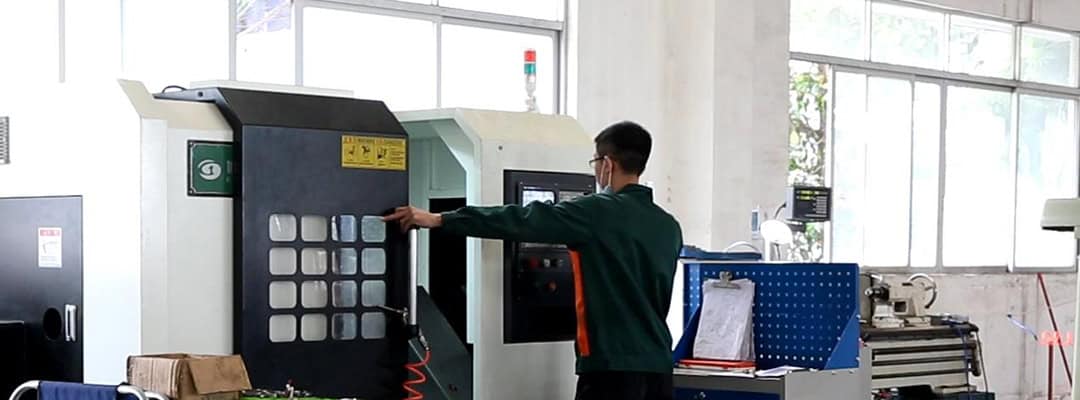
Step 2: Factory Inspection (Quality Control System Assessment)
TISI requires assurance that the factory can consistently produce compliant products.
- The Audit: Inspectors from TISI or an Authorized Inspection Body (IB) (such as UL, TÜV SÜD, EEI) visit the factory.
- Scope of Audit: They review:
- Raw material verification (e.g., checking brass composition certificates).
- In-process quality controls.
- Finished goods testing capabilities (Does the factory have a test rig for pressure/flow?).
- Calibration of measuring instruments.
- ISO 9001 Exemption: If the factory holds a valid ISO 9001 certificate from an accredited body (IAF MLA signatory), the scope of the on-site audit may be reduced or the Quality Control System assessment may be conducted via document review, significantly speeding up the process.
Step 3: Product Sampling and Testing
During the audit, the inspector randomly selects samples from the production line or warehouse.
- Sealing: Samples are sealed and marked by the inspector.
- Testing: Samples must be sent to a TISI-Accredited Laboratory.
- Test Labs: Most testing is done in Thailand (e.g., at the Electrical and Electronics Institute – EEI, or other private labs like SGS/TÜV Thailand if accredited for TIS 2067).
- Test Criteria: Full testing against TIS 2067-2552 (Dimension, Flow Rate, Pressure, Coating thickness, Heavy Metal Migration).
Step 4: Technical Review and License Issuance
- Committee Review: TISI officers review the Factory Inspection Report and the Laboratory Test Report.
- Issuance: If compliant, the license is granted. The official timeline for standard comparison is ~19 days, but the total cycle (audit + shipping + testing + review) typically takes 4 to 6 months.
Marking, Labeling, and Digital Compliance (QR Codes)
Once licensed, the product must be marked. TISI regulations on marking are strict, and non-compliance is a common reason for market surveillance fines.
The Mandatory TISI Mark
For Compulsory Standards like TIS 2067, the mark is the TISI logo (a stylized industrial cog/symbol) inside a Circle. (Voluntary marks are in a Square).
- Placement: The mark must be permanent and visible on the product. For faucets, this is usually laser-etched on the body or stamped on the back/base.
- Required Text: The mark must be accompanied by:
- Standard Number: “TIS 2067-2552” (or “มอก. 2067-2552” in Thai script).
- Licensee Name: The name of the Thai importer.
- Brand/Model: As specified in the license.
The QR Code Mandate (2021 Update)
To combat counterfeit marks, TISI implemented a digital tracking system.
- Effective Date: Mandatory since July 20, 2021.
- Requirement: A QR Code must be displayed alongside the TISI mark.
- Function: Scanning the code directs the user/inspector to the TISI database, validating that the specific product model is covered by an active license held by the importer.
- Creation: Licensees generate these QR codes via the TISI QR-Code online system.

Marking Small Products
Recognizing the aesthetic and physical limitations of faucets, TISI allows flexibility.
- Product vs. Package: While the TISI mark and text should ideally be on the product (min size 3mm), if the product is too small, the QR Code and full details can be placed on the primary packaging (the box).
- Recommendation: Manufacturers usually laser etch the minimal TISI logo + Standard Number on the faucet body and place the full TISI Logo + Name + QR Code block on the retail box.
Import Procedures and Customs Clearance
The final hurdle is the physical importation of goods.
National Single Window (NSW)
TISI certification is integrated with Thai Customs via the NSW system.
- The Lock: When an HS Code for faucets (typically 8481.80) is declared, the system flags it as a “Controlled Product.”
- The Key: The importer must input their TISI License Number into the NSW system. The system cross-references the license with the TISI database. If valid, the shipment is cleared. If invalid or expired, the “Red Line” is triggered, leading to detention and inspection.
The “Mini-License” (Section 21 Bis)
For limited imports (e.g., samples for exhibition, testing, or very small batches), an importer can apply for a specific-purpose license under Section 21 Bis of the Act.
Limitation: This is not for general trade. It requires proving the goods are for a specific, non-commercial (or limited commercial) purpose.
Strategic Recommendations for Market Entry
For foreign manufacturers and brands aiming to enter the Thai faucet market, the following strategic roadmap is recommended:
Audit Product Design for 0.1 MPa:
Before applying, test your products internally at 0.1 MPa (1 bar). Ensure the flow rate is above 0.5 L/min and below 6.0 L/min. Many “water-saving” aerators designed for high pressure (3 bar) restrict flow too much at 1 bar, causing failure of the minimum flow requirement.

Select the License Holding Structure:
- Direct to Distributor: Fastest, but locks you to that distributor.
- Third-Party License Holder: Use a specialized regulatory service provider to hold the license. This gives you flexibility to change distributors without re-certifying.
- Thai Subsidiary: Best for long-term commitment and control.
ISO 9001 Alignment:
Ensure your factory’s ISO 9001 certificate is current and issued by an accredited body (e.g., UKAS, ANAB). This saves months of inspection time.
Material Safety Check:
Verify your brass supply. If you cannot guarantee low lead content consistently, switch to Stainless Steel (SUS 304) components or use verified DZR brass to ensure passing the migration tests.
Digital Labeling Integration:
Incorporate the QR code requirement into your packaging artwork design process immediately to avoid repacking costs upon arrival in Thailand.
Conclusion
Compliance with TIS 2067-2552 is essential for selling sanitary faucets in Thailand. While the process requires patience—typically 4–6 months—it serves as a powerful quality filter, protecting reputable manufacturers and wholesalers from low-quality, non-compliant competitors.
By understanding both the technical requirements and the TISI administrative process, and by starting testing and documentation early, companies can turn this regulatory barrier into a mark of trust and gain access to one of Southeast Asia’s most dynamic construction markets.
Regulations may change, so professional local compliance guidance is strongly recommended.
