
In Poland, sanitary fittings like faucets and valves must comply with strict EU and national regulations, particularly regarding products in contact with drinking water. The PZH Hygienic Certificate (Atest Higieniczny) is a legal requirement, ensuring safety against heavy metal migration and microbial risks. Since 2016, certification has focused on water-contact components like faucets and hoses, increasing responsibility for wholesalers and builders.
This post highlights the importance of PZH certification and offers tips on sourcing compliant, safe products.
The Institutional and Regulatory Ecosystem
To navigate PZH certification, it’s important to understand that it’s part of Poland’s broader national strategy for environmental health safety, not just a bureaucratic requirement.
The National Institute of Public Health (NIZP PZH-PIB)
The National Institute of Public Health (NIZP PZH-PIB)» is Poland’s oldest public health institution, with a dual mandate: conducting research and issuing certifications for products impacting human health.
For the sanitary industry, the Department of Environmental Health and Safety (Zakład Bezpieczeństwa Zdrowotnego Środowiska) is key. It evaluates products in contact with drinking water, such as faucets and valves. Unlike food safety, which focuses on materials like cutlery and packaging, this department’s focus is on long-term leaching, corrosion, and biofilm formation in hydraulic systems.
The Legal Cornerstone: The Act on Collective Water Supply
PZH certification is legally required under the Act of 7 June 2001 on collective water supply and sewage disposal. Article 12 mandates that materials and products used in water treatment and distribution must undergo a hygienic assessment to ensure they do not compromise water quality.
Voluntary vs. Mandatory Certification
The current landscape creates a binary classification for products:
- Mandatory Certification: Products participating in the transport or storage of potable water. This includes:
- Washbasin faucets.
- Kitchen sink mixers.
- Shower valves and diverters.
- Showerheads and hoses (due to aerosol inhalation risks and backflow potential).
- Angle valves and connection hoses.
- Voluntary Certification: Products interacting with water not intended for consumption or external skins.
- Bidet faucets (technically grey water/hygiene, though often certified for safety).
- Bath fillers (if distinct from drinking sources, though usually treated as mandatory due to potential ingestion).
- Bathroom accessories (soap dishes, grab bars).
The Biochemistry of Safety: Why Certification Matters
The PZH certification process addresses two main risks: chemical toxicity and microbiological contamination in sanitary fittings.
Heavy Metal Migration: The Lead and Nickel Threat
- Lead Neurotoxicity: Lead leaching from brass faucets is a serious concern, as even small amounts can harm children’s development and cause cardiovascular issues in adults. Poor-quality brass or inadequate surface treatment can cause lead levels to exceed safety limits in stagnant water.
- Nickel Allergies: Nickel, used for chrome plating, can migrate into drinking water, triggering allergic reactions in sensitive individuals. PZH tests ensure nickel levels remain below the 20 µg/L threshold.
- PZH Testing Standards (PN-EN 12873): Products undergo migration tests, with water stagnated for 72 hours at various temperatures. Leached metals are measured to ensure they don’t exceed maximum permissible limits.
The 4MS Common Approach: A Metallurgical Standard
While Poland isn’t part of the 4MS Initiative, it follows its metallic material standards for drinking water safety. Brass alloys like CW617N (CuZn40Pb2) are common, with strict impurity limits. Suppliers using generic terms like “Brass” without specific alloy designations may be selling substandard material with high lead content, failing PZH tests.
Microbiology: Biofilms and Legionella
- Biofilms: Microbial biofilms can harbor pathogens like Legionella, which thrive in plumbing systems. Certain materials, like low-grade PVC or EPDM, can promote biofilm growth.
- PZH Evaluation: PZH-certified components use materials that don’t support microbial growth. For example, shower hoses made of PEX or high-grade silicone are evaluated for safety against biofilm formation, ensuring no aerosolization of harmful bacteria.
The Certification Process Deconstructed
For a wholesaler or builder, understanding the mechanics of obtaining a certificate provides the context needed to spot inconsistencies in supplier documentation.
The Application Workflow
The path to a PZH certificate is a formal administrative and scientific procedure, not a simple registration.
- Submission: The “Applicant”» (Manufacturer or Importer) submits a detailed application to NIZP-PZH. Crucially, this must include the exact chemical formulation of all components. For a faucet, this means the alloy composition of the body, the polymer type of the cartilage, and the rubber grade of the O-rings.
- Assessment: The Department of Environmental Health and Safety reviews the documentation against the “Positive Lists” (like the 4MS list for metals or EU Reg 10/2011 for plastics).
- Laboratory Testing: Samples are sent to the Institute’s labs or accredited third-party labs. They undergo the migration tests (PN-EN 12873) and sensory tests (odor/taste) described in Chapter 2.
- Issuance: Upon passing, a certificate is issued. It lists the product name, the applicant, the manufacturer, and the validity period.
Validity and Renewal
Certificates are not permanent.
- Standard Validity: 3 years for water-contact products.
- Conditional Validity: The certificate remains valid only if the product composition remains unchanged. If a manufacturer switches from a German O-ring supplier to a cheaper generic one, the certificate is technically void until re-assessed.
- Expiration: Wholesalers must actively track expiration dates. Using a certificate that expired yesterday is legally equivalent to having no certificate at all during a PINB inspection.
The “Foreign Certificate” Misconception
A common misunderstanding in Poland is that foreign certificates like DVGW (Germany), WRAS (UK), or ACS (France) can replace the PZH certificate.
- The Rule: A foreign certificate does not automatically substitute the PZH certificate in Poland.
- The Nuance: While PZH accepts test results from accredited labs supporting foreign certificates, such as DVGW, it still requires submission of these reports for review to ensure they meet Polish standards.
- Takeaway: A DVGW certificate indicates quality and streamlines the PZH process, but it’s not a legal substitute for the Polish certification required on construction sites.
Strategic Implications for Market Stakeholders
For different players in the market, PZH certification serves different strategic functions.
For Manufacturers (Domestic and Foreign)
- Market Entry Ticket: Without PZH, you are effectively locked out of the B2B market.
- Liability Shield: In the event of a water quality incident (e.g., a lead spike in a school), the certificate is the first line of defense, proving that the manufacturer exercised due diligence.
- Design Feedback: The rigorous PZH assessment often uncovers quality issues (e.g., poor plating) that the manufacturer can correct to improve product durability.
For Distributors and Importers
- The “Private Label” Challenge: Distributors importing generic Chinese faucets under their own brand must apply for the PZH certificate themselves. They cannot rely on the Chinese factory’s declaration unless the factory holds a PZH cert, placing the responsibility for technical documentation on the distributor.
- Stock Management: The expiration of a certificate (after 3 years) can render stock unsellable. Distributors must have a robust tracking system to initiate renewal 3-4 months before expiration.
For Architects and Engineers
- Specification Security: specifying PZH-certified products protects the designer from professional liability claims regarding building safety.
- Green Building: PZH certification supports credits in green building schemes (BREEAM, LEED) related to water quality and material safety.
How to Verify if a Supplier Holds PZH Certification
In the global sanitary market, the risk of fraudulent documentation is high. Without a centralized database to verify PZH certificates, wholesalers and builders must take a thorough approach to supplier verification.
Step 1: Forensic Document Analysis
Do not accept a certificate at face value. Scrutinize the PDF document.
- Template Consistency: Does the document look like other valid PZH certificates? It should have the specific NIZP-PZH header, the round seal, and a signature.
- Data Integrity: Check the “Product” field. Fraudsters often use a valid certificate for “Copper Pipes” and photoshop it to say “Faucets.” The certificate number usually contains a code (e.g., HK/W/…) that is sequential.
- Signatory Check: Look at the name of the signatory (e.g., the Department Head). A quick Google search should confirm if that person held that position at the NIZP-PZH on the date of issue. If the certificate is dated 2024 but signed by a director who retired in 2021, it is a forgery.
Step 2: Direct Verification with NIZP-PZH
Since there is no online lookup, you must go to the source.
- Action: Email the Department of Environmental Health and Safety.
- Email: sekretariat-bk@pzh.gov.pl or atestacja@pzh.gov.pl.
- Request: “Please confirm the validity of the attached certificate number [Number] for product [Name].”
- Timing: This process can take days. Do this before placing an order, not when the goods are stuck at customs.
Step 3: Cross-Referencing International Databases
Use international databases to validate the supplier’s credibility. If a supplier claims their PZH certificate is based on their DVGW or WRAS approval, verify those approvals online.
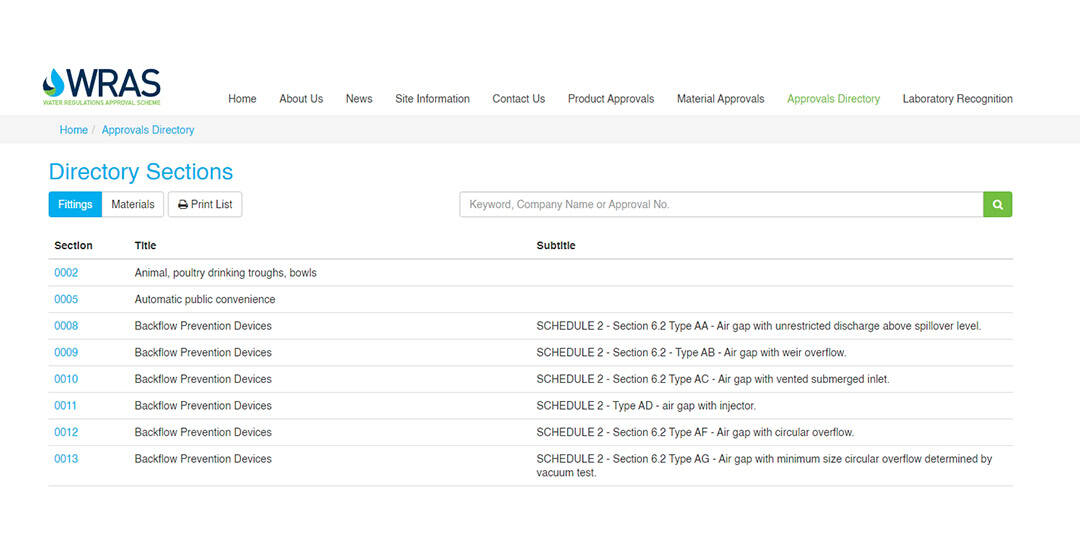
- WRAS Database»: Search by supplier name.
- DVGW Cert Database: Search by license number.
- Interpretation: If a supplier is listed in these rigorous databases, they are a legitimate manufacturer. If they claim to supply PZH-certified goods but exist in no other quality database, exercise extreme caution.
Conclusion and Future Outlook
The PZH Hygienic Certificate is essential for ensuring the safety of Poland’s drinking water, protecting against lead, nickel, and harmful bacteria.
For wholesalers and builders, compliance is no longer optional. With stricter regulations since 2016, the enforcement of the Construction Law, and alignment with the 4MS standards, a proactive, forensic approach is required. The lack of a centralized database can be managed with a “Verify, Don’t Trust” strategy.
Key Recommendations:
- Wholesalers: Act like manufacturers—verify Chinese suppliers with audits and 4MS testing, and maintain thorough technical files.
- Builders: Empower site managers to reject non-compliant products and incorporate PZH checks into digital site logs.
- Everyone: Treat the PZH certificate as a critical safety component, not just a formality.
Looking ahead, the EU’s new Drinking Water Directive may harmonize standards across the region, but for now, the NIZP-PZH remains the ultimate authority in Poland.
