
If you plan to sell sanitary tapware in Sweden, CE marking is not enough.
Sweden enforces some of the world’s strictest rules on drinking-water hygiene and acoustic performance. A faucet that sells millions of units in Germany or France can be legally unsellable in Stockholm.
For wholesalers, this is a commercial risk. Your customers—plumbers, contractors, and developers—depend on you to supply products that will not trigger lawsuits, insurance disputes, or building inspection failures.
This guide shows you how to identify suppliers that truly qualify for the Swedish market—those holding RISE Type Approval, the real license to sell in Sweden.
Table of Content
The “Passport”: What is RISE Type Approval?
In the EU, you usually look for a CE mark. But here’s the kicker: There is no CE mark for sanitary tapware hygiene or acoustics. The European standards don’t cover the specific Swedish requirements for lead leaching or noise.
That’s where RISE (Research Institutes of Sweden) comes in.
A Type Approval (Typgodkännande») from RISE is the de facto “passport” for the Swedish market.
- What it does: It legally proves that the faucet meets the Planning and Building Act (PBL) and Boverket’s Building Regulations (BBR).
- The “Fork Mark”: Look for Boverket’s logo (it looks like a little pitchfork or trident) on the product or packaging. That is the seal of approval.
- Why you need it: Type Approval may be “voluntary” on paper, but in reality it is commercially mandatory. Without it, developers face personal liability, and most installers and insurers will simply refuse to work with the product.

RISE Certification Rules (CR) and the Type Approval Process
RISE is the primary notified body for this sector in Sweden and has established specific Certification Rules (CR) that define how manufacturers prove compliance with BBR.
CR 033: The Core Rule for Sanitary Tapware
CR 033 is the core certification rule for Type Approval of sanitary tapware, consolidating all mechanical, acoustic, and hygienic testing into one compliance framework.
- Scope:
- Kitchen, washbasin and shower mixers, plus thermostatic valves.
- Requirements under CR 033:
- Type Test Reports – From ISO/IEC 17025 labs covering EN 817 / EN 1111 (mechanical), ISO 3822 (acoustic), and NKB 4 / EN 15664 (hygienic).
- Material Declaration (BOM) – Full disclosure of all water-contact alloys and polymers.
- Installation Instructions – Must be in Swedish and meet industry pedagogical standards.
CR 068: The Hygienic Standard
CR 068 is the specialized rule for “Products in Contact with Drinking Water.” It details the chemical safety assessment.
- 4MS Integration (CR 068):
CR 068 aligns Swedish Type Approval with the 4MS Common Approach (France, Germany, Netherlands, UK). Only materials listed on the 4MS Positive List are accepted. - Assessment Paths:
- Material Assessment – Confirms approved brass alloys (e.g., CW617N, CW511L) and purity compliance.
- Migration Testing – Requires NKB 4 or EN 15664 leaching tests to verify lead ≤ 5 µg/L and nickel ≤ 20 µg/L.

The Certification Process Flow
The process of obtaining Type Approval via RISE is rigorous and typically follows this linear progression:
- Pre-Compliance Check – Review BOM against the 4MS Positive List; replace non-compliant materials with DZR brass.
- Accredited Testing – Nordic Package tests (mechanical, acoustic, leaching) at RISE, Kiwa, SINTEF, or Eurofins.
- Application Submission – Test reports and technical file submitted to RISE.
- Technical Review – RISE verifies acoustic Class I/II compliance and dezincification depth < 200 µm.
- Factory Audit – Initial inspection of the Factory Production Control (FPC).
- Certificate Issuance – Type Approval granted (valid 5 years).
- Marking – Product laser-marked with the Type Approval number and Boverket Fork Mark.
Core Technical Compliance
Mechanical & Safety Integrity (EN 817 / EN 1111 / EN 1717)
Before any hygienic or acoustic review, the faucet must first prove fundamental mechanical reliability.
- EN 817 – Single-Lever Mixers
- Endurance test: 70,000–200,000 life cycles (simulating 10–15 years of use)
- Pressure resistance: 16 bar leaktightness / 25 bar body strength
- Cross-flow prevention: hot and cold supplies must remain isolated
- EN 1111 – Thermostatic Mixers
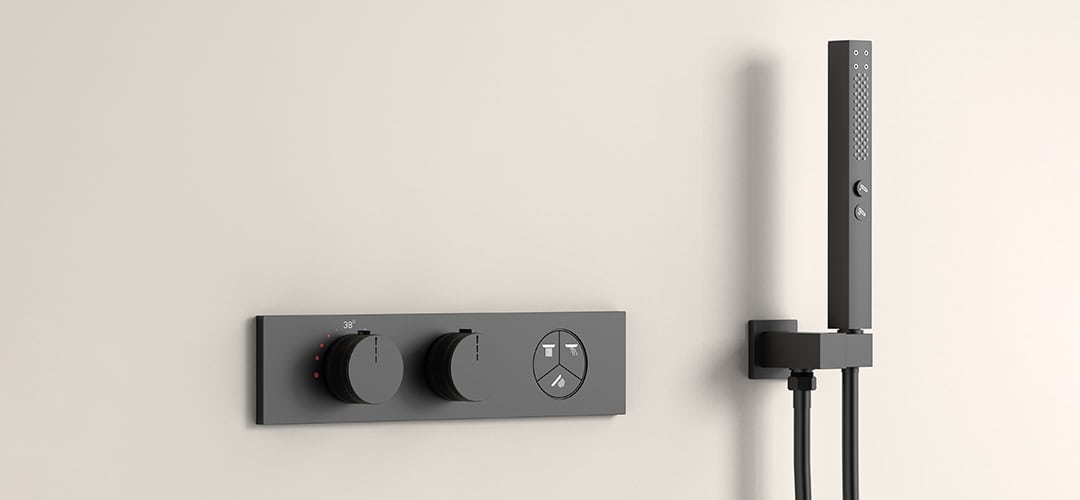
- Mandatory 38 °C safety stop
- Fail-safe shut-off: water must stop within <2 seconds if cold supply fails
- EN 1717 – Backflow Protection
- Pull-out kitchen sprays must integrate EB-type check valves or vacuum breakers
- Back-siphonage protection must be documented and verified
Hygienic Safety & Material Compliance (4MS / CR 068)
Nordic water chemistry is aggressive, making material selection the single most critical certification factor.
- 4MS Positive List
- All wetted metals must be listed on the 4MS Positive List
- Impurities such as As and Sb are tightly limited
- Lead & Nickel Migration
- Lead leaching limit: ≤ 5 µg/L
- Nickel leaching limit: ≤ 20 µg/L
- Requires low-lead or lead-free alloys (CW511L, silicon brass)

- Dezincification Resistance (ISO 6509)
- Mandatory DZR brass (CW602N / DZR-CW617N)
- Max dezincification depth: < 200 µm
- Standard brass is the most common rejection cause
Acoustic Certification (ISO 3822)
In Sweden, faucet noise is regulated as a building emission.
| Class | Noise Level | Application |
|---|---|---|
| Group I | ≤ 20 dB(A) | High-grade residential (Sound Class A/B) |
| Group II | 20–30 dB(A) | Standard housing |
| > 30 dB(A) | Not classified | Often rejected in apartments |
- Noise-Control Engineering
- Cartridge mufflers & mesh flow stabilizers
- Low-noise aerators (e.g., Neoperl Class A)
The Upsells: Energy Class and Säker Vatten
If you want to win contracts with the big municipal housing companies (Allmännyttan) or large developers like Skanska or NCC, “legal compliance” isn’t enough. You need “market compliance.”
Energy Classification (SS 820000)
Sweden is obsessed with energy efficiency.
- The System: Faucets are rated Class A to Class E.
- The Tech: To get Class A or B, the faucet usually needs “Cold Start” (handle in the middle = 100% cold water) and a flow restrictor.
- Why you care: Many “Green Building” loans and certifications (like Miljöbyggnad) require Class A or B faucets. If your stock is unclassified, you lose those bids.
Säker Vatten (Safe Water)
This is an industry standard, not a law, but it rules the plumbing trade.
- The Installer’s Bible: Plumbers in Sweden follow the Säker Vatten installation rules to guarantee their work.
- The Manual: Your product must have an installation manual written in Swedish that is pedagogically clear and explicitly states that it complies with Säker Vatten rules.
- The Feature: Wall-mounted mixers need to fit specific wall boxes and sealing collars to prevent leaks behind the tiles.
How to Spot a Fake: The Supplier Vetting Checklist
You’ve found a supplier who claims they have a RISE certificate. Great! But in the world of global sourcing, documents can be… let’s say, “creative.”
Here is how you verify if they are the real deal using the RISE Certification Rules (CR 033) framework.
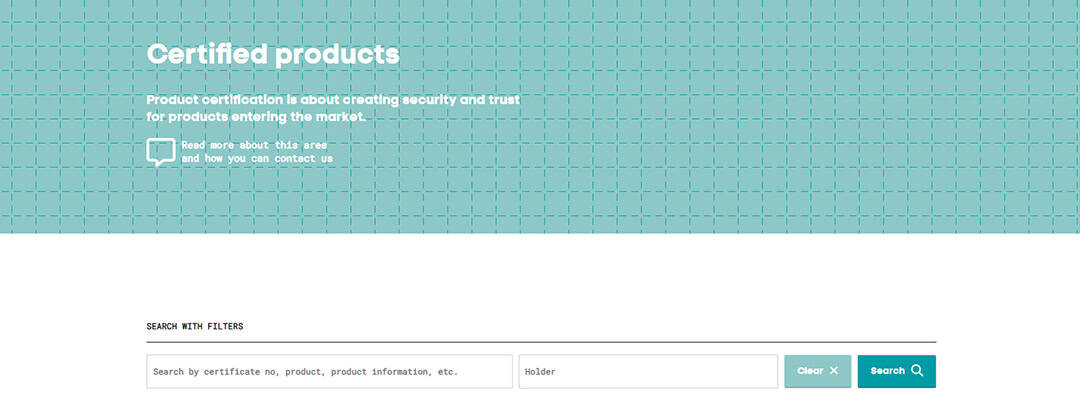
Step 1: Check the Certificate Number on the RISE Database
Never take a PDF at face value. Go to the RISE Certified Products Database» (available on ri.se).
- Search by the Type Approval Number (usually 4 digits, e.g., “SC1234”) or the company name.
- Status Check: Is the certificate “Valid”? Certificates are valid for 5 years. If it’s expired, the stock is technically non-compliant.
Step 2: Verify the “Scope” (The SKU Trick)
This is the oldest trick in the book. A factory gets one high-end faucet certified, then tries to sell you their entire catalog under that same certificate number.
- Check the Annex: Every RISE certificate has an appendix listing the specific models (Article Numbers/Model Names) covered.
- Match the BOM: If the certificate covers a kitchen mixer with a specific cartridge, but the supplier is offering you a “new version” with a cheaper cartridge, that new version is not certified.
Step 3: Look for the Marking
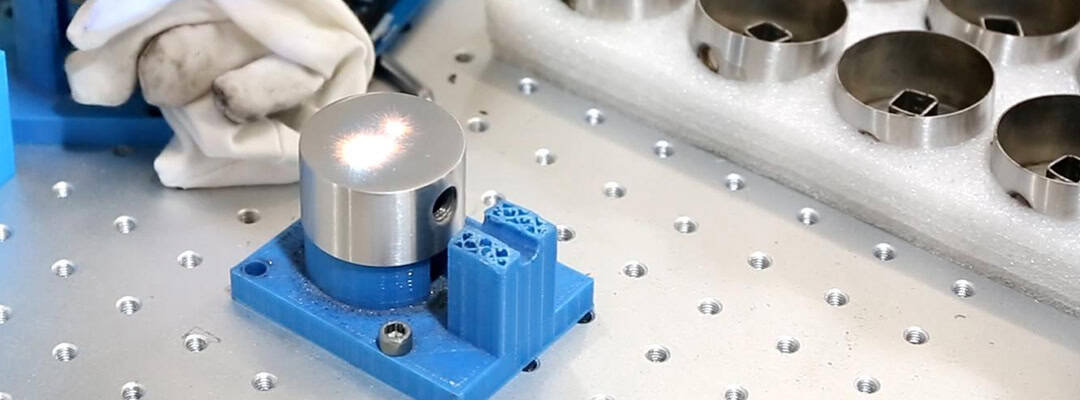
Under the certification rules, the product must be marked.
- Pick up a sample unit. Look for a laser etching or casting mark.
- You should see:
- The Manufacturer’s logo/brand.
- The Type Approval Number.
- The Boverket “Fork Mark” (often alongside the RISE logo).
- If the product is clean (no markings), it’s a red flag. The inspector at the building site will look for these marks.
Step 4: Ask for the “Nordic Package”
If the supplier says, “We are in the process of getting certified,” ask to see their test reports from a lab like Kiwa, SINTEF, or Eurofins.
- Look for a report covering EN 817 (Mechanics), NKB 4 (Migration/Lead), and ISO 3822 (Acoustics).
- If they only have EN 817 (Mechanical), they are only 33% of the way there. They still need to pass the “Killer Tests” (Lead and Noise).
Summary Checklist for the Wholesaler
Before you sign that Purchase Order, run through this final check:
- Type Approval: Does the supplier have a valid RISE certificate (CR 033)?
- Database Verify: Did I check the certificate number on the RISE website?
- Model Match: Is the exact SKU I am buying listed in the certificate appendix?
- Material: Is it DZR Brass? (Ask for the ISO 6509 report if unsure).
- Acoustics: Is it Class I or II? (Crucial for apartments).
- Marking: Is the product laser-marked with the Type Approval number?
- Manual: Is there a Swedish installation manual included in the box?
- Energy: Is it Energy Class A/B? (Optional, but highly recommended for volume sales).
conclusion
Yes, Swedish Type Approval looks demanding—but that “red tape” is actually your strongest protection.
By choosing compliant products, you are buying risk reduction:
- For plumbers: No callbacks caused by dezincification failures.
- For property owners: Fewer insurance disputes if leaks occur.
- For your brand: You become the “safe choice” in a trust-driven market.
Don’t chase the cheapest supplier. Choose one that truly understands Nordic Brass—and let compliance become your strongest sales argument.
